Category: Uncategorized
FIMO Components: LEADER IN INNOVATIVE TELECOMMUNICATIONS

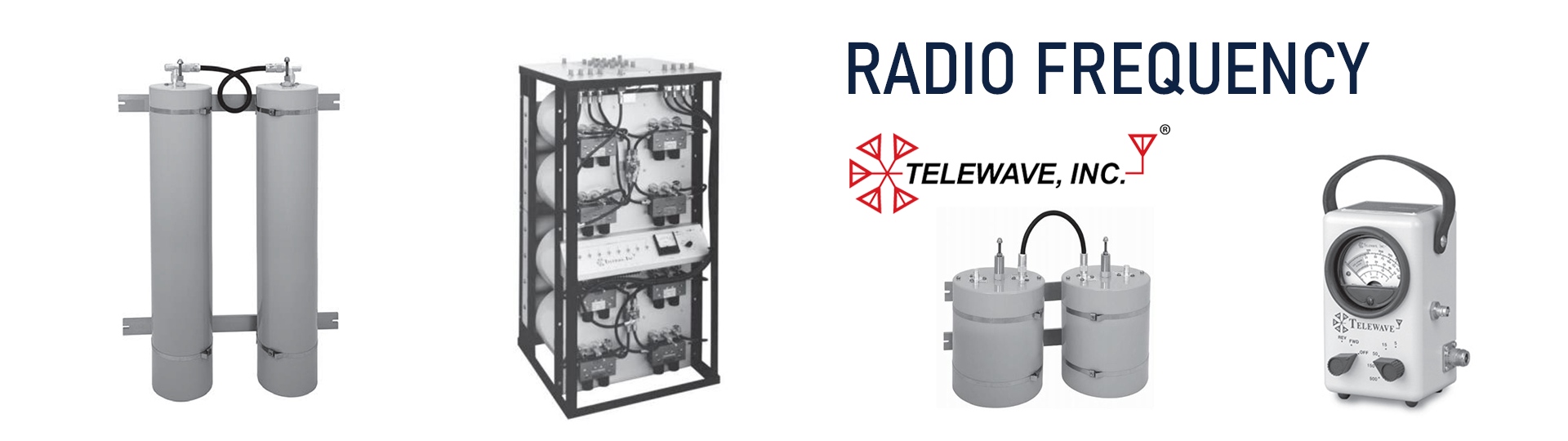
How does antenna gain affect the strength of a signal transmitted ?
Antenna gain indicates how strong a signal an antenna can send or receive in a specified direction. Gain is calculated by comparing the measured power transmitted or received by the antenna in a specific direction to the power transmitted or received by a hypothetical ideal antenna in the same situation. If the comparison is to an ideal (text-book pattern, lossless) antenna radiating or receiving energy equally in all directions, the gain is measured in dBi (decibels-isotropic). If the comparison is to an ideal lossless half-wave dipole antenna, defined as having 2.15 dB gain, the gain is measured in dBd (decibels-dipole). Note that the decibel is a logarithmic unit, meaning a 6dB is almost four times the reference power; 7 dB is five times the reference power, etc.

Direction of the power propagation is a key characteristic of antennas. Gain is often represented in a two-dimensional plot of the radiation pattern where the radius of the plot is on a decibel scale that may be normalized to maximum value for the particular antenna, or to an isotropic radiator. The direction that has the most power is considered the main lobe, exactly opposite the main lobe is the back lobe, and any other unwanted or unintended radiation features are called sidelobes. If no direction is specified, gain refers to peak value in the direction of the antenna’s main lobe.
For example, a collinear antenna oriented east-west with 6.41 dBd gain would be able to transmit or receive more than 4 times the signal power of an ideal dipole antenna in the east and west directions. There would be very little signal transmitted in the north and south directions.
Higher gain generally means that the signal is concentrated over a smaller beam width. This might be appropriate for some linear applications, such as those that need to isolate a specific signal and avoid external interfering signals. A wider beam might be needed, for example, if there are many receiving units that move around that need to stay connected, as in police or taxi dispatchers. Different antenna types have different antenna patterns.

Dipole
A dipole antenna is, at its simplest, two straight rods or wires oriented end to end on the same axis, with a balanced feedline connected to the two adjacent ends. By itself, a dipole antenna is close to omnidirectional, with nearly equal power transmission in all directions. In addition to VHF transmissions, dipole antennas are often used in shortwave applications or as FM broadcast receivers.

Yagi (or Yagi-Uda)
A Yagi antenna is an array of dipole elements, where one dipole is connected to receive the signal, and the other elements are designated to reflect or redirect the energy in the desired direction. Yagi antennas are directional and need to be mounted facing the intended signal path. The main lobe is wide, with a somewhat smaller back lobe. This type of antenna can be mounted horizontally or vertically, depending on the desired signal polarization. Yagi antennas work well for point to point as well as multipoint applications.

Collinear
A collinear antenna array is a series of dipoles mounted end-to-end. With up to 10dBd gain, they have a narrow bandwidth and multiple side lobes. They are often used in mobile communications, such as police, fire, and taxi dispatchers.
<strong>More Information</strong>
» Source Telewave
» Telewave – Related Products


Top 5 ways to stream video sustainably and profitably
In today’s digital age, streaming video has become a popular and profitable business. However, with the increasing demand for online video content, it’s crucial to adopt sustainable practices to ensure long-term success. Here are the top 5 ways to stream video sustainably and profitably:
- Optimize Video Compression: Use efficient video compression techniques to reduce file sizes without compromising quality. This reduces bandwidth consumption and energy usage, making your streaming platform more sustainable.
- Implement Adaptive Bitrate Streaming: Adaptive bitrate streaming adjusts the quality of the video based on the viewer’s internet connection speed. This not only provides a better viewing experience but also reduces buffering, resulting in lower bandwidth usage.
- Utilize Cloud-Based Services: Use cloud-based streaming services to host your videos. Cloud services are more energy-efficient than traditional servers and offer scalability, allowing you to adjust resources based on demand, thus reducing costs and environmental impact.
- Monetize Through Ads and Subscriptions: Implement a monetization strategy that includes both advertising and subscription models. Ads can generate revenue without directly impacting viewers, while subscriptions provide a steady income stream.
- Promote Sustainable Practices: Educate your audience about the importance of sustainable streaming practices. Encourage them to reduce energy consumption by streaming in lower resolutions when possible and to support environmentally friendly initiatives.
By adopting these practices, you can stream video content sustainably while also maximizing profitability.
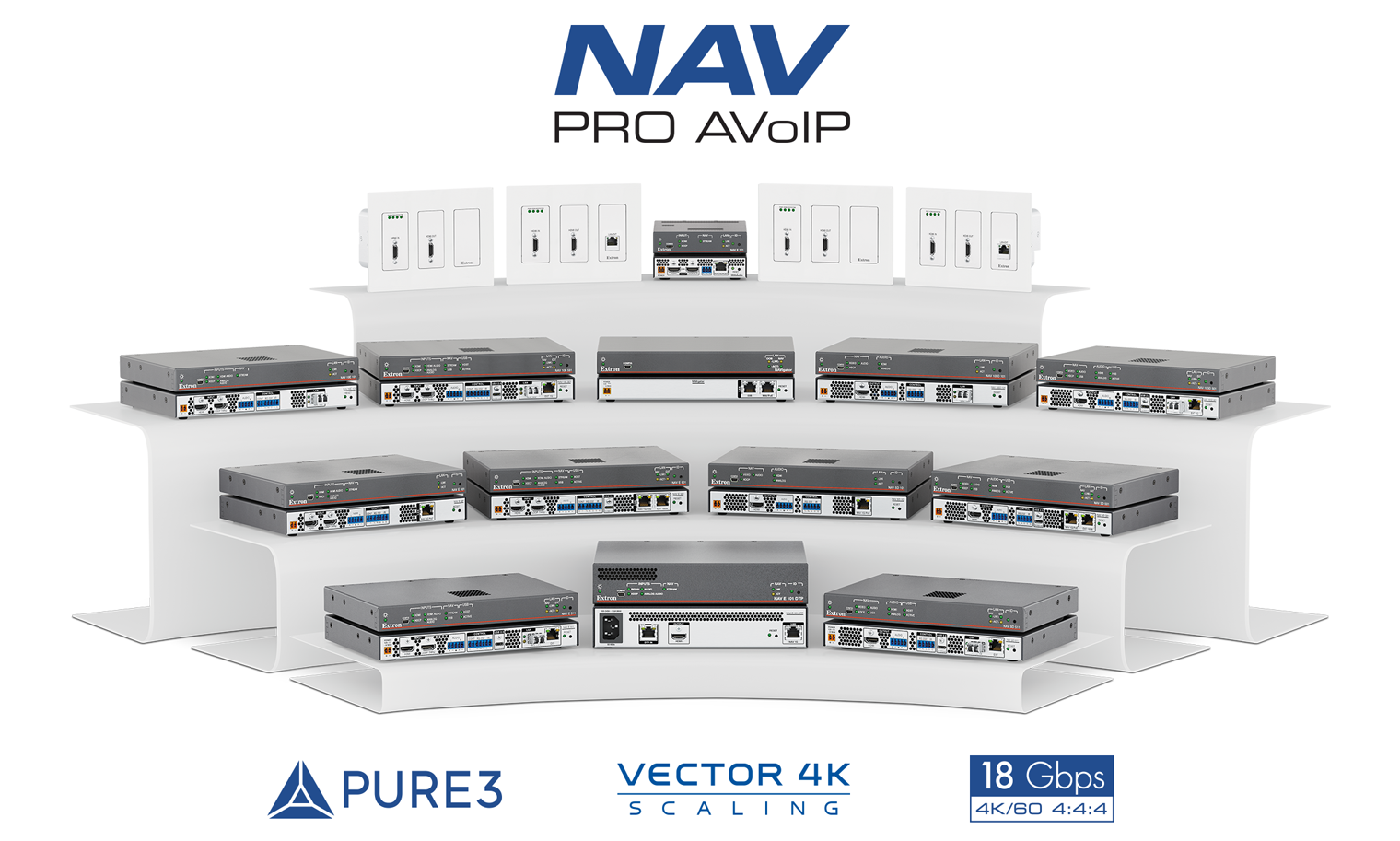
How is Extron solving issues with bursty network ?
Bursty network traffic refers to fluctuations in data transmission where there are sudden spikes of high data transfer rates followed by periods of low activity or idle time. This pattern is common in many network environments, particularly in those that handle a mix of different types of data traffic, such as video streaming, file transfers, and web browsing. Bursty network traffic can be challenging to manage because it can lead to congestion, packet loss, and increased latency, impacting the overall performance and reliability of a network.
Extron has addressed the challenges of bursty network traffic with its innovative PURE3 codec, specifically designed for the Pro AV market. This codec is a key component of Extron’s NAV Pro AV over IP Series, which has been recognized for its exceptional capabilities in handling bursty network traffic. By being able to tolerate and effectively manage bursty network traffic, PURE3 ensures that video and audio content is transmitted smoothly and without interruption, even in environments with highly variable data traffic patterns.
The ability to handle bursty network traffic is particularly important in converged networks, where different types of data traffic share the same infrastructure. Extron’s PURE3 codec offers improved network resiliency, allowing it to cope with the bursty network traffic typically found in these settings. This is a significant advantage over many third-party codecs, which can struggle under similar conditions and may require costly isolated networks to function properly.
Extron’s approach to bursty network traffic not only enhances the performance of its Pro AV systems but also provides clients with greater flexibility in choosing their network architecture. Whether operating on converged or isolated networks, users can rely on Extron’s PURE3 codec to deliver robust and pristine video quality, unaffected by the challenges of bursty network traffic.
In summary, Extron’s innovation in handling bursty network traffic through its PURE3 codec has significantly benefited clients in the Pro AV industry. By ensuring reliable and high-quality video transmission even in the face of bursty network traffic, Extron has set a new standard for AV over IP solutions, offering unparalleled performance and flexibility in network design.
What is PURE3 ?
The Extron PURE3 codec patented, wavelet-based, compression technology offers improved network resiliency. The PURE3 codec tolerates bursty network traffic found on converged networks while exceeding the performance characteristics of standards-based compression systems. Others rely on delicate third-party codecs that fail when exposed to unpredictable network traffic. Those codecs require costly isolated networks, but PURE3 is the ONLY codec designed for the Pro AV industry that delivers robust, pristine video on converged or isolated networks. With sub-frame latency, PURE3 processes video signals with 4:4:4 color quantization, while maintaining the original source quality and native resolution. PURE3 Intelligent Selective Streaming is an exclusive Extron technology that leverages periods of low motion in streamed content to enhance streaming performance. The PURE3 codec also features advanced error concealment, providing high immunity to network errors such as bit errors, jitter, and out-of-order, or dropped data packets. PURE3 error concealment provides robust picture delivery without the increased latency or bandwidth typically introduced by other error correction schemes.

Error Concealment
PURE3 offers improved network resiliency that ensures reliable transmission of high-quality imagery with the ability to conceal network errors caused by bursty network traffic found on converged networks. The decoder holds image data and presents it if needed, concealing missing information. PURE3 error concealment does not increase latency or add overhead like the error correction schemes used by competitors.

Ultra-low Latency
Streams professional-grade video with ultra-low latency using Extron’s unique wavelet-based PURE3® codec, guaranteeing exceptional user experience and response time in mission-critical applications.
For more information contact the AVW technical team | Download the Brochure

611 Network Streaming Monitor



Outdoor All Weatherproof Touchscreen Monitor
Glory Star’s Magnetar Weatherproof Touch Screen is a reliable and cost-effective industrial-grade solution suitable for indoor and outdoor applications. With an IP65 rating, the front glass is both dust and water-resistant, making it a perfect choice for public environments.

The Magnetar Weatherproof Touch Screen delivers seamless and accurate touch response with a 6H scratch-resistant touch glass that can withstand demanding applications, making it an excellent solution for industrial automation, healthcare, and interactive presentations. The high-brightness screen is also fingerprint and scratch-resistant, ensuring a long-lasting, high-quality display.
Designed with reliability in mind, the Magnetar Weatherproof Touch Screen is equipped with optional external mounting brackets for easy integration. It is available in sizes ranging from 10 inches to 21.5 inches, making it versatile for industrial applications.
The touchscreen is face-up, landscape, and portrait-friendly, designed for optimal viewing and flexibility in mounting options. It maintains optimal clarity and viewing experience, whether viewed directly, at an angle, or from a distance.
The Magnetar Weatherproof Touch Screen supports Windows and Android platforms for ease of operation, and its scratch and fingerprint-resistant features make it suitable for high-traffic and harsh environments. Additionally, the touch on the water feature allows you to activate the touch screen even when water is spilt on the touch glass.
The Magnetar Weatherproof Touch Screen also comes with a STAROS Kiosk Lockdown App for Android Platforms, which provides custom kiosk lockdown features to protect your information while streamlining all device activities into one simple process.
Glory Star’s Magnetar Weatherproof Touch Screen is built to withstand the test of time, making it a perfect solution for interactive digital signage, in-store retail, industrial automation, and kiosks. The product’s high-quality and flexible features make it an excellent commercial touch display investment for any business.

Small Description here

Small Description here

Small Description here

Small Description here

Small Description here

AVW to Distribute Revolution Acoustics commercial speakers in Australia and New Zealand
The deal will cover the full line of SSP6 Multiducers, RevNet 2140 Amps, Pendant 360 and UBIQUI T360 commercial audio solutions.
Audio technologies and loudspeaker solutions specialist Revolution Acoustics has appointed AVW Group to distribute its full line of SSP6 Multiducers, RevNet 2140 Amps, Pendant 360 and UBIQUI T360 commercial audio solutions in Australia and New Zealand.
“Revolution Acoustics delivers a truly immersive audio experience in every type of commercial environment through constant-SPL, completely consistent audio coverage throughout the listening space,” AVW president and CEO Murray Hunt said. “Their SSP6 Multiducers take transducer technology to a whole new level of crystal-clear quality, bringing a more compelling audio experience to listeners. We are excited to introduce this remarkable line to our resellers.”
Senior Customer Relationship Manager Nick Cocks, added: “Retail stores, restaurants, office lobbies, hospitals, classrooms, workplace break rooms, transportation centres and houses of worship, among other facilities, have something in common – they all need sound reinforcement and background audio systems that provide a pleasant listening experience without any dropouts or hot spots. Equally important is clear, intelligible paging for patrons, doctors and students. Revolution Acoustics’ constant-SPL (sound pressure level) systems can help customers achieve this easily in ways never imagined. Their value proposition is superior, and our resellers will immediately recognise that.”
The Exertis team offers us a robust, turnkey way to grow our commercial business in Australia and New Zealand. Their product knowledge, vertical market expertise and sales support are of the very highest quality. The combination of our commercial product line and the Exertis sales and marketing team is going to take our business to a whole new level of success.
#AVW to Distribute Revolution Acoustics commercial speakers in Australia and New Zealand

Joan Wall Mounts


Discount
